I haven't given up on Elemental Tiles; there was just another game idea I've been toying with that I thought I'd try out, primarily because it's so simple, and yet still pretty fun. I'm going to run with this idea for a bit and then see which of the two people seem to like better and also which one would be easier to implement (for my first ever published game I'm okay with going for the quick win).
The game is called (for now) Overflow. It's played with multiple players on the same device. It's important that only the player whose turn it is be looking at the screen when it's his or her turn. So if playing on a computer, only have the current player look at the screen when instructed; if on a mobile device, pass it to the current player when it's their turn. The object of the game is to have as few points as possible. On your turn you will draw a random number between 1 and 10. Only you will know what numbers you draw. You then have the choice to either add that amount to your Bank (thus adding to your score) or add it to the Pot (the Pot is shared by all players). The Pot has a certain limit. You don't know what the limit is, but it will be a random number between 25 and 50. If you cause the amount in the Pot to go over this limit, the Pot overflows and the entire contents are added to your Bank! Then a new round begins. Play continues until each player has had a chance to be first in a round (so the number of rounds matches the number of people playing). At the very end, the player with the fewest points wins.
The game doesn't tell you what numbers the other players got, but it does tell you whether the player before you Banked or added to the Pot, and it tells you how many players have added to the Pot so far. Using this information, make a calculated decision whether to Bank your points, hurting your score, or to risk an overflow by adding to the Pot.
I whipped up a simple prototype to test the concept. It's just text and buttons for now. Move the slider to choose how many players and then begin the game. If you want to play again, refresh the page. Here's the link:
bit.ly/overflow_p1
So how is it? Is it fun? Does the game interface provide you enough information to make a decision whether to Bank or add to the Pot?
Wednesday, December 31, 2014

Saturday, October 18, 2014
Review: Glitchhikers

Play... if you find driving late at night and pondering the complexities of the universe relaxing.
Don't play... if you prefer your landscape to have more than a few dozen poly's per square mile.
This is an odd little game; another one of those that upon finishing, leaves you wondering if it's technically even a "game" at all. But like I said in my review of The Plan, I believe a game is an experience, and Glitchhikers certainly delivers an... interesting... experience.
Don't play... if you prefer your landscape to have more than a few dozen poly's per square mile.
This is an odd little game; another one of those that upon finishing, leaves you wondering if it's technically even a "game" at all. But like I said in my review of The Plan, I believe a game is an experience, and Glitchhikers certainly delivers an... interesting... experience.
In Glitchhikers you are driving late at night. You're alone in your car surrounded by a low-poly landscape, listening to strange music on a staticky radio. You can speed up, slow down, change lanes, and look to your left and right, and that's about it. As you drive, you will periodically pick up hitchhikers, who will engage you in conversation about the universe, the meaning of life, science, religion, etc. The folks you pick up get stranger as the drive goes on. During your conversations, you can occasionally pick your response, and what they say in turn will vary accordingly. The feeling this game gives you isn't spooky, but rather contemplative. The topics of conversation are fairly deep stuff, and I applaud the creators for not shrinking from broaching difficult topics. The entire game lasts about 15 minutes, though you can play it again to see different characters and listen to different conversations. The dialogue occasionally gets a bit depressing and there are a few instances of mild profanity, but nothing too troubling.
<spoilers>
As interesting as the experience was, I do have my criticisms. This game had the potential to be more than it turned out to be, and with relatively little more thought and development I think. While you can choose your responses to the conversation, it doesn't really change it much. Your passenger will say something a bit different for each response, but then continue the same way, no matter which you choose, which makes the dialogue seem kind of disconnected. There's also the lack of engagement that I didn't really care for. Yes, you can speed up, change lanes, and whatever, but it doesn't affect anything in the game. You can occasionally see taillights up ahead of you, but you can never get close enough to see the car, let alone pass them or otherwise interact with them. Add to that the fact that the car steers itself, and you can literally spend the majority of the game just sitting there staring at the screen, without even touching the controls.
My final complaint is about the first character you pick up, which is always the same person: some girl who's smoking what the game hints is a joint, whose smoke occasionally drifts across your field of vision. This makes me wonder if the creators are trying to make you think the whole thing is just a weird drug trip, and if that's the case, that's really disappointing to me, because I think it cheapens an otherwise thought-provoking experience.
</spoilers>
Despite it's imperfections, the experience is one worth having. The game is available at the website above for a "pay what you want" price, even free if you want; I got it from Indie Game Stand for a couple bucks, and while I doubt I'll play it much in the future, I think it's at least worth that. You may like it, or you quite possibly may not. Each player will likely take something different away from the experience.
Saturday, October 4, 2014
Elemental Tiles Look and Feel
 |
| Cryptica screen shot from Google Play Store. |
I was immediately reminded of another tile sliding game I've played called Cryptica. The mechanics, rules, and objective are all different from the game I'm making, but I like the look and feel of this game. The stone tiles motif matches what I was thinking for my own game, as well as the sound effects of stone sliding against stone. It gives it a feeling of being ancient and mysterious.
 |
| Pokemon energy symbols by bagleopard |
 |
| Avatar symbols by FourMoons |
Though simple, I want the tile and board designs to be well done. I could probably whip something up myself, but I'm hoping to work together with a digital artist to produce the graphics for this game.
Saturday, September 27, 2014
Elemental Tiles Alpha Now Available!
I've decided to allow those who would be interested to join the "Alpha Team" for games that I'm working on. The webplayer version will continue to be available for a good while; maybe even indefinitely. But for a small contribution (pay what you want, $1 minimum) you'll receive the executable version that you can play on your Windows, Mac, or Linux machine. You'll also be entitled to receive all updates during production as well as the final version for the computer.
To join the Alpha Team, click this link: https://gum.co/cYdk
To join the Alpha Team, click this link: https://gum.co/cYdk
Tuesday, September 23, 2014
Review: The Plan
I decided in addition to posting info about projects I'm working on, I'd also like to write informal reviews of games I've tried, especially indie games. I'll do my best to clearly mark any spoilers so if you're unfamiliar with the game you can give it a try before reading what I have to say about it that might give anything important away. So with no further blah-blah here's my first review: The Plan.
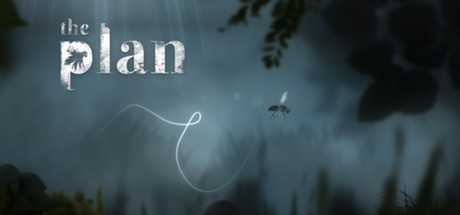
Play... if you've got five minutes to spare. And if you don't, make the time!
Don't play... if you hate beauty.
"A little experiment" by Krillbite Studio. Little is right. You can literally play through the entire game in just a few minutes. Also, it's free, (and on steam to boot) so you should seriously just download and play it right now before you continue reading. I'll wait.
Don't play... if you hate beauty.
"A little experiment" by Krillbite Studio. Little is right. You can literally play through the entire game in just a few minutes. Also, it's free, (and on steam to boot) so you should seriously just download and play it right now before you continue reading. I'll wait.
Some folks complain that this isn't a real game, but I gotta tell ya, I love stuff like this! I love it when designers make something we haven't seen before and test our definition of what a game is. Personally, I like Jesse Schell's explanation the best: a game is an experience. And that's exactly what The Plan is. A bite-sized yet surprisingly rich experience. There's very little else I could say about it without spoiling it, so you should really play it now. No seriously, do it!
<spoilers>
First of all, this little game was very well put together. I especially love the timing of everything. As the fly is ascending into the heavens the scenery changes and the music plays at just the right moment to keep you wondering what's coming, wanting to know what's ahead. The final few moments of the game instilled in me a feeling of transcendence followed very quickly by a sudden feeling of loss. I can't think of any other game that's made me feel that way. I have since gone back to play it in order to get that feeling again, but it's just not as poignant as the very first time, and I doubt it ever can be. In a way, that makes it all the more beautiful.
Perhaps what I love most are the provocative questions this game raises, not least among them being "What is the meaning?" Every person could play this game and come away with a different idea of what the game means. Perhaps it means the things we find the most beautiful are also the most dangerous. Maybe it's a metaphor of the inevitability of death. Maybe it's about finding joy and beauty in the journey before our destination arrives, unexpectedly and all too soon.
</spoilers>
I hope to see more games like this in the future. In this way I could easily see gaming as a new form of art: easily consumable by those with a passing interest, but also full of meaning for those with the inclination to dissect it.
Saturday, September 20, 2014
E. Tiles First Working Prototype
My first working prototype for Elemental Tiles is now up and running! You know what that means: Usability Testing!! So, for those new to this little game I'm making, here's the basics:
Click the link below to play. You may need to install/allow the Unity Webplayer plugin. Don't worry, it's legit.
http://bit.ly/etile_p1
Some browsers block plugins like this by default, so make sure you check for that. Chrome for example shows a little "blocked" icon in the upper right corner of your browser; click it to allow it to run. Also, if nothing happens when you press the keys, make sure the game has focus; click somewhere on the game and it should accept input.
- Use the arrow keys to move the tiles. They all move at once and keep moving until they hit a boundary or another tile (a la 2048).
- When two elements are pushed together and one is stronger than the other, the weaker one disappears. If they are opposites, they both disappear. Nothing special happens if two of the same element are pushed together.
- Note: Two elements may be next to each other without reacting; you need to actually push them towards each other for the reaction to occur.
- You get points for each tile that disappears. The more tiles that disappear in one move, the more points per tile you will receive.
- After every move, a new, random tile is added to a random location on the board. If the board is full when this would normally happen, the game is over. Try to get as many points as you can before the game ends!
My wife and I have both been playing it a few times, and it's kind of a fun little puzzle I think. I can usually get around 100 points before filling the board. This prototype is text only, but it is functional. So I welcome anyone who would like to play it to click the link below, and pretty please leave a comment in this blog letting me know what you think. And be honest! I know there are flaws in the gameplay; it's just hard for me to see them as the developer. Some things to think about:
- How easily do you get the hang of the game and how it works?
- Is it too easy/too hard? Does it get more difficult as it goes along? If so, does the difficulty increase too fast or slow?
- How long did you play? If you lost, did you feel like playing again to beat your last score?
- And most importantly, is it fun?!
Thanks to all who take the time to play and comment; it really is very helpful! My next step is to determine the look and feel and get some actual graphics working. Until then!
Click the link below to play. You may need to install/allow the Unity Webplayer plugin. Don't worry, it's legit.
http://bit.ly/etile_p1
Some browsers block plugins like this by default, so make sure you check for that. Chrome for example shows a little "blocked" icon in the upper right corner of your browser; click it to allow it to run. Also, if nothing happens when you press the keys, make sure the game has focus; click somewhere on the game and it should accept input.
Thursday, September 18, 2014
Element Strengths
I've decided to greatly simplify the mechanics of my game Elemental Tiles. Instead of having to figure out a bunch of different interactions that could happen like before, the goal now is to simply make the tiles disappear. This happens by pushing different elements together that cause some kind of reaction.
There are now eight elements to play with: Fire, Wood, Earth, Electric, Water, Metal, Air, and Sonic. Every element is strong against one element and weak against another: Earth is strong against Electric and weak against Wood, Metal is strong against Air and weak against Water, etc. Also, each element has an opposite: Fire's opposite is Water, Metal's opposite is Wood, etc. You could think about the elements as being positioned on a wheel in the order listed above. Elements directly across from each other are opposites and each one is stronger than the one directly to its right (or left I suppose, if you're in Australia).
When you push two tiles together, a reaction occurs if one is stronger than the other, or if they are opposites. A stronger tile causes a weaker tile to disappear, and two opposites cancel each other out, causing them both to disappear.
I'm really liking this idea. One of my concerns though is that the reactions make sense. Most of them do; I think the opposites are intuitive enough, and with the order I placed them in I was pleasantly surprised to find that most of the strengths already make some sort of sense: Fire burns Wood, Wood consumes Earth, Earth grounds Electric, etc. There are only a few reactions that I'm not so sure of:
There are now eight elements to play with: Fire, Wood, Earth, Electric, Water, Metal, Air, and Sonic. Every element is strong against one element and weak against another: Earth is strong against Electric and weak against Wood, Metal is strong against Air and weak against Water, etc. Also, each element has an opposite: Fire's opposite is Water, Metal's opposite is Wood, etc. You could think about the elements as being positioned on a wheel in the order listed above. Elements directly across from each other are opposites and each one is stronger than the one directly to its right (or left I suppose, if you're in Australia).
When you push two tiles together, a reaction occurs if one is stronger than the other, or if they are opposites. A stronger tile causes a weaker tile to disappear, and two opposites cancel each other out, causing them both to disappear.
I'm really liking this idea. One of my concerns though is that the reactions make sense. Most of them do; I think the opposites are intuitive enough, and with the order I placed them in I was pleasantly surprised to find that most of the strengths already make some sort of sense: Fire burns Wood, Wood consumes Earth, Earth grounds Electric, etc. There are only a few reactions that I'm not so sure of:
- Electric and Sonic as opposites - Sonic means sound waves or vibrations. It sort of seems to make sense that it would be the opposite of Electric, but I'm not sure why. I suppose at a really deep level you could think of it as the difference between particles and waves (Electric being electrons which are particles, Sonic being vibrations or waves) but maybe that's a bit too complicated to be intuitive?
- Metal beats Air - Why would Metal be stronger than Air? I can't really think of any good reason, other than it just happens to turn out that way when you arrange the elements on the wheel.
- Air beats Sonic - This kind of makes sense; without air you can't have sound waves. It's not as obvious as most of the other reactions though.
- Sonic beats Fire - Again, this is just the order it came in, and I'm not totally sure why Sonic should be stronger than Fire. Unless of course you blasted a fire with sound waves that were strong enough to completely blow it out... which may be pretty cool actually.
I'm hesitant to change any of the elements or their order on the wheel, because that would then disrupt the other elements that already make sense in their current positions. But maybe there are other elements that could be considered natural opposites to those that already make sense in their current positions.
I welcome any ideas that you think would make sense, as well as general feedback about the game design. In the meantime, I've made a prototype of the game that is almost finished. I'll post it here when it's ready to play!
Saturday, June 28, 2014
Elemental Tiles: Paper Prototype
I haven't come up with a catchy name yet; for now I'm calling it Elemental Tiles. It's similar to the game 2048 which you can play here: http://2048game.com/ 2048 is a very simple game in which you slide numbered tiles around on a board and try to put matching numbers together. The catch is, all the tiles move at once and they move in the direction you press until they run into a wall or another tile. Also, new tiles are constantly appearing at random. (Play it for a minute or two; you learn quick what it's all about.)
Elemental Tiles has similar mechanics, except instead of numbers, the tiles show elemental symbols for things like water, earth, fire, plant, lightning, etc. and different tiles react in different ways when they come in contact with each other. For example, when a fire tile touches a plant tile, the plant tile burns up and becomes another fire tile. When a water tile touches an earth tile, the water disappears and the earth becomes a plant tile. Etc. Part of the game will be learning what different tile combinations do.
Below is a simple animation showing what a round of gameplay might look like, followed by an explanation of each frame:

Elemental Tiles has similar mechanics, except instead of numbers, the tiles show elemental symbols for things like water, earth, fire, plant, lightning, etc. and different tiles react in different ways when they come in contact with each other. For example, when a fire tile touches a plant tile, the plant tile burns up and becomes another fire tile. When a water tile touches an earth tile, the water disappears and the earth becomes a plant tile. Etc. Part of the game will be learning what different tile combinations do.
Below is a simple animation showing what a round of gameplay might look like, followed by an explanation of each frame:
- The start of the round. We have 1 fire, 1 water, 1 plant, and 2 earth tiles.
- If we're playing on a device with a touch screen, you slide your finger anywhere on the screen in the direction you want the tiles to move. So sliding our finger up causes all of the tiles to move up until they hit something.
- The fire moves up to touch the plant and the water moves up to the top boundary.
- The fire burns the plant tile, which disappears...
- ...and is replaced by another fire tile (essentially, the fire is spreading).
- Now we make our second move, and swipe to the right.
- The tiles move all the way to the right until they can't move further, bunching up against the right boundary.
- When fire has nothing left to burn, it dies. Earth doesn't burn, so both fire tiles disappear. At the same time, the water tile is now touching an earth tile. Both tiles disappear...
- ...and the earth tile is replaced by a plant (the water soaked into the earth and caused a plant to grow).
Elemental Tiles is meant to be an easy game to play and would be a good candidate for mobile devices. It will have a simple look and feel, with the tiles and game board appearing to be made of stone and stone-like sound effects as tiles slide around and bump into each other, as well as other sound effects that match different element interactions (fire burning, water splashing, etc.).
Subscribe to:
Posts (Atom)